
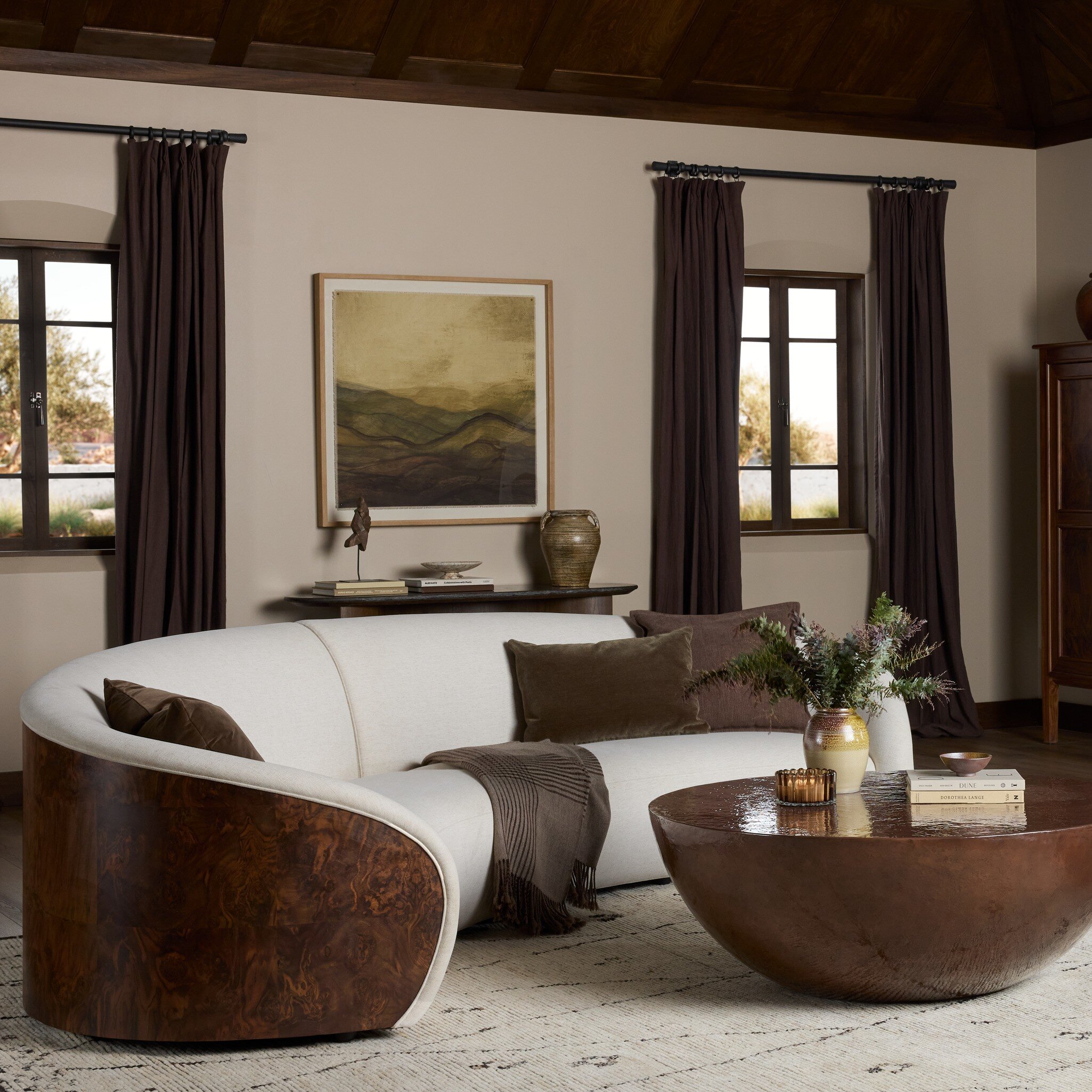
Choosing a sofa or sectional sofa is one of the biggest decisions when furnishing a living room. Your seating influences how the room looks, how people move through it, and how comfortably you can relax or entertain.
Both options can work beautifully. The best choice depends on your room’s layout, the way you like to sit, and how you use the space each day. Here’s what to consider before making your decision.
Start With Your Living Room Layout
Before choosing a style or fabric, look at the usable space in your room. Windows, doorways, fireplaces, and openings to adjoining rooms all affect where seating can go.
A sofa offers flexibility because it can be paired with different combinations of chairs, ottomans, and side tables. This makes it useful in rooms with several doorways or an irregular shape.
A sectional connects multiple seats in one arrangement. It can help define a seating area in an open floor plan or make good use of a corner. However, its longer footprint and return require careful placement to keep pathways clear.
Consider how people enter the room and move through it. You should be able to reach adjoining spaces without weaving around furniture.
Think About How You Use Your Seating
Picture a typical evening at home. Do you stretch out to watch television, sit upright to read, or gather with friends for conversation?
A sectional can be a comfortable choice for a household that likes to lounge together. A chaise provides a place to put your feet up, while an L-shaped configuration can bring several people into the same seating area.
A sofa paired with chairs creates more individual seating options. Guests can face one another, and each person has a defined place to sit. This arrangement also lets you combine different levels of support, such as a relaxed sofa with a more upright accent chair.
Comfort depends on the individual piece, too. Seat depth, cushion construction, back height, and arm shape deserve just as much attention as the overall configuration.
Compare Usable Seating
A larger piece of furniture doesn’t always provide more practical seating.
The corner of a sectional may be a favorite spot for curling up, but it can be less convenient when several adults want to sit upright at the same time. A chaise takes up floor space while primarily serving one person who wants to stretch out.
Likewise, a long sofa with wide arms may offer less sitting space than its outside dimensions suggest.
When comparing options, think about where people will actually sit. A sofa and two chairs may accommodate your guests more comfortably, while a sectional may better suit everyday family lounging.
Consider Scale When Choosing a Sofa or Sectional Sofa
Either option can overwhelm a room if its proportions are wrong. Overall width matters, but so do depth, back height, and the visual weight of the frame.
A deep sectional with broad arms will feel more substantial than a tailored design with narrow arms and exposed legs. The same applies to sofas: two pieces with similar widths can have very different presences.
Mark the proposed furniture footprint on your floor with painter’s tape. Include the full depth and any chaise or return, then account for your coffee table, side tables, and nearby chairs.
This helps you see whether the arrangement leaves enough room for daily movement and whether the furniture feels balanced within the space.
Decide How Much Flexibility You Want
A sofa gives you more freedom to rearrange the room over time. You can reposition chairs, change side tables, or introduce an ottoman as your needs evolve.
Sectionals vary in flexibility. Some modular designs allow individual pieces to be rearranged, while others have a fixed configuration. A sectional designed for one corner may be difficult to place elsewhere.
If you’re considering a chaise or L-shaped sectional, confirm its orientation using the manufacturer’s diagram. Make sure the configuration you order matches the layout you need.
It’s also worth checking delivery access. Doorways, stairs, elevators, and tight turns can affect which pieces will fit into your home.
Think About the Entire Seating Arrangement
Your main seating should work with the other pieces in the room.
With a sofa, accent chairs can introduce contrasting shapes, patterns, or finishes. A pair of swivels might connect the conversation area to an adjoining space, while an upholstered ottoman can offer a place to rest your feet.
With a sectional, pay attention to access to tables. People seated at either end should have a convenient place to set down a drink. The coffee table should also suit the opening within the arrangement and allow comfortable movement around it.
Evaluate the furniture as a complete layout so that each piece supports how you want the room to function.
Try the Comfort in Person
Photographs and measurements help narrow your choices, but sitting on furniture reveals details that are difficult to judge online.
Try sitting the way you normally would at home. Check whether your feet reach the floor, whether the back feels supportive, and whether the seat depth suits you. If you share the room with others, consider their comfort preferences as well.
Ask about available cushion options, dimensions, and configurations. Customization may help you find a better fit for both your room and your household.
Find the Right Seating at Birmingham Design Studio
The right sofa or sectional sofa should feel comfortable, fit your room, and support the way you live. A thoughtful layout brings those considerations together before you commit to a piece.
At Birmingham Design Studio, we can help you explore seating options, compare fabrics and finishes, and plan an arrangement for your home. Visit our showroom in Birmingham, Michigan, to discover sofas, sectionals, and complementary furniture for your living room.

 Kristi Karimpour and her husband Kamran founded Birmingham Design Studio over three decades ago. Their goal was to establish a full-service interior design studio that would cater to the diverse needs of clients seeking sophisticated and timeless designs in the heart of Birmingham, Michigan. From the beginning, Kristi’s vision was clear – to create interiors that would not only reflect her clients’ personalities and lifestyles but also stand the test of time.